
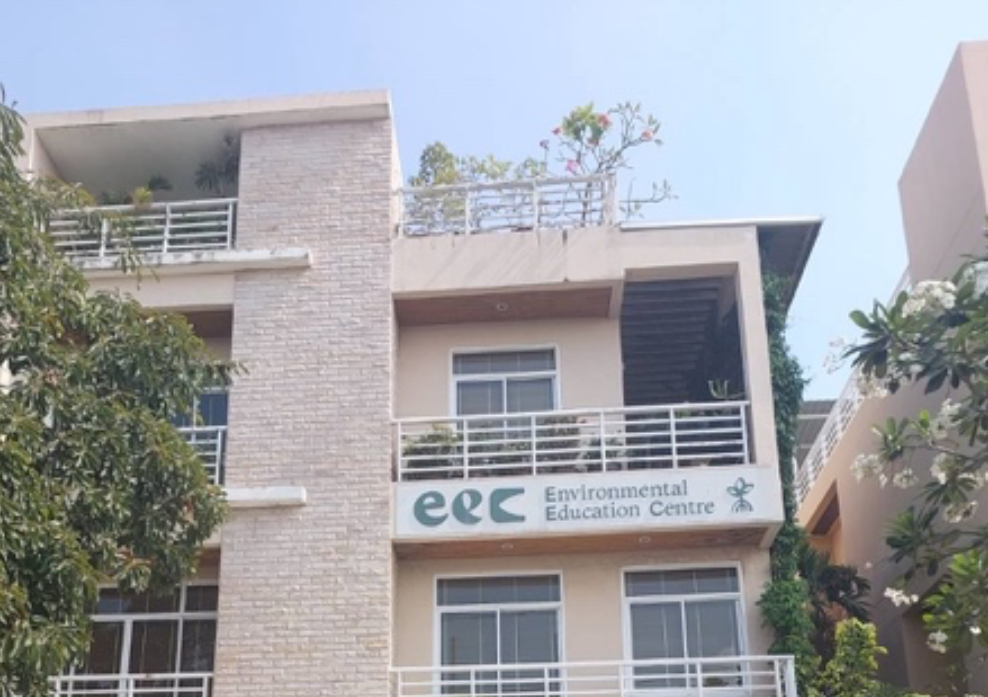
【Internship Site Introduction】Environmental Education Center Thailand (EEC Thailand) (Samut Prakan Province, Thailand)
Established in 2015,
the Environmental Education Center, Thailand (EEC Thailand) is guided by the philosophy that “Nature is the Best Classroom.”
The organization pioneered a “Classroom Without Walls” approach,
transforming Thailand’s forests, wetlands, marine ecosystems, and protected areas into immersive learning environments.
Through experiential and place-based education,
EEC Thailand provides participants with direct engagement in environmental and sustainability issues within authentic natural settings.
Its educational programs encompass a wide range of disciplines,
including biodiversity conservation, wildlife veterinary science, circular economy, geology, and sustainable resource management.
To date, the organization has delivered more than 420 educational programs
and served over 10,000 participants from across the Asia-Pacific region.
Its contributions to environmental education and youth development have been recognized through several prestigious national awards,
including Thailand’s National Youth Day Award and the “Best Green Change Influencer” Award.
EEC Thailand is widely recognized for fostering environmental stewardship, experiential learning, and cross-cultural exchange,
providing participants with valuable opportunities to develop global perspectives on sustainability and conservation.
Internship Opportunities
This internship placement is designed to provide participants with comprehensive exposure to the full cycle of
environmental education program development and implementation.
Core internship responsibilities may include:
1. Program Design and Facilitation
- (1)Assist in the development of experiential environmental education activities and learning modules.
- (2)Support the delivery of outdoor educational programs and group facilitation activities.
- (3)Observe and learn from experienced environmental educators,
- gaining practical insights into instructional methods, participant engagement, and experiential learning techniques.
2. Field-Based Learning and Program Operations
- (1)Participate in educational programs conducted across diverse natural environments,
- including forests, wetlands, and marine ecosystems.
- (2)Assist with program logistics, operational coordination, and outdoor risk management.
- (3)Engage in intercultural exchange activities by sharing personal perspectives and experiences
- with participants and staff from diverse backgrounds.
- (4)Develop leadership competencies in sustainability education through hands-on learning
- and international collaboration.
Through this placement,
interns will gain practical experience in environmental education, program management, and community engagement
while strengthening their capacity to serve as future sustainability leaders in an increasingly interconnected world.