
Empowering a Continent: The Legacy of SADC REEP and the Vision of Prof. M.J. Ketlhoilwe
To understand the evolution of global environmental education,
one must look to Southern Africa in the 1990s.
The year 1994 was a watershed moment for the region.
As nations emerged from colonialism and apartheid,
the Southern African Development Community (SADC) recognized that political freedom and economic development were linked to environmental health.
Historically, environmental management in the region relied on "fortress conservation"
a colonial model that separated local communities from their ancestral lands to create protected wildlife parks.
In 1994, a radical paradigm shift began.
The focus moved toward empowering local people to manage their own natural resources.
To achieve this, the SADC Environment and Land Management Sector conceptualized the SADC Regional Environmental Education Program (REEP).
Over the last three decades,
SADC REEP has grown into one of the most successful, sustained, and impactful regional environmental education initiatives in the world.
The Foundation: Period One (1994 Onward)
When SADC REEP was formalized in the mid-1990s
(hosted by the Wildlife and Environment Society of South Africa and strongly supported by Rhodes University),
it faced a monumental task.
The initiative had to unite environmental educators across 15 member states, overcoming vast geographic distances,
language barriers, and different education systems.
During this first critical period, SADC REEP did not just teach "nature studies.
It redefined environmental education for the Global South.
The program established a framework where ecological literacy was taught alongside human rights,
poverty alleviation, and democratic participation.
To scale this massive ambition, SADC REEP focused its actions on four foundational pillars:
- 1.Policy Integration: SADC REEP experts worked directly with the Ministries of Education in countries such as Botswana,
- Zimbabwe, and Zambia to draft national environmental education policies, ensuring sustainability was built into the very DNA of national curricula.
- 2.Capacity Building (Training the Trainers): Rather than trying to reach every student directly,
- the program focused on building a strong group of educators.
- Through internationally recognized certificate courses, SADC REEP trained thousands of teachers,
- university lecturers, and NGO workers, who then returned to their home countries to train others.
- 3.Contextual Materials Development: The program rejected the importation of Western educational materials.
- Instead, it funded and supported the creation of localized resources—
- books, toolkits, and case studies—that addressed specific Southern African realities,
- such as prolonged droughts, rural agriculture, and local biodiversity.
- 4.Regional Networking: SADC REEP transformed isolated, underfunded educators into a powerful,
- coordinated continental network, deeply intertwined with the Environmental Education Association of Southern Africa (EEASA).
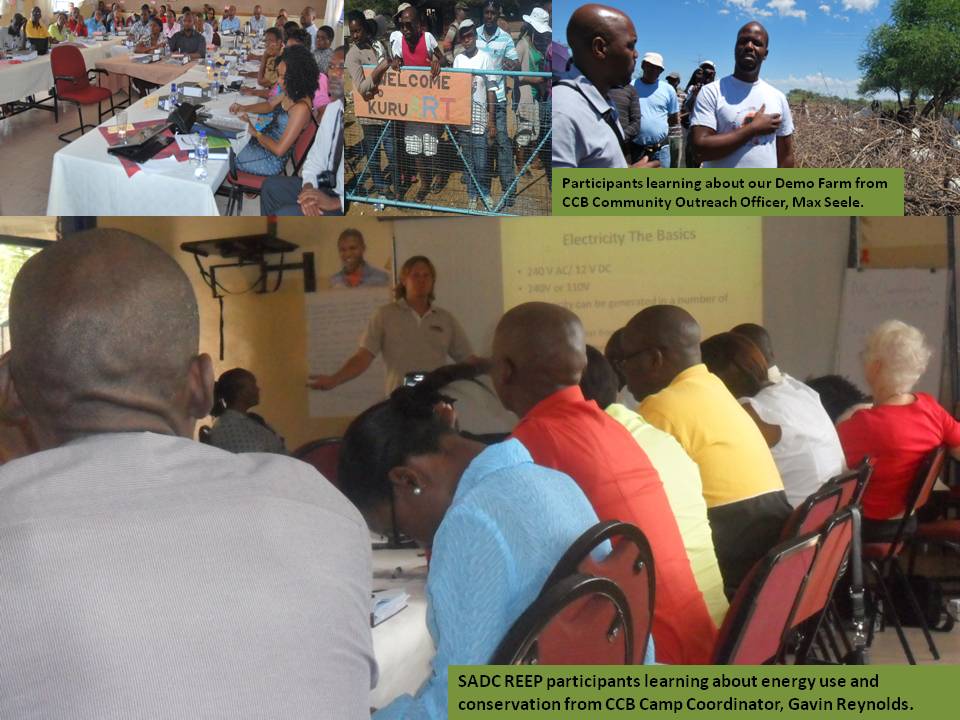
The SADC Regional Environmental Education Program (SADC REEP) is an annual training targeting environmental practitioners
from government, private sector, and civil society in Botswana and the SADC region.
This intense two-week training rotates among SADC countries.
In 2012, it took place in Ghanzi, Botswana, from 3rd to 14th December.
The main objective of the course was to train environmentalists from all sectors to disseminate Environmental Education
and Education for Sustainable Development in their workplaces and beyond.
It also aimed to bring together practitioners to network,
share ideas and experiences, and improve their presentation skills.
Participants were to become project implementers through the Change Projects Initiative,
proposing projects to implement at their workplaces or residences.
These projects will be presented at a similar workshop in Botswana before the end of December 2013.
Some projects will be selected to represent at the Environmental Education Association of Southern Africa (EEASA) conference in Malawi in 2014.
Excursion trips included visits to Cheetah Conservation Botswana (CCB) Ghanzi camp,
D'Kar village, and Edo's Rhino Camp.
CCB Camp Coordinator Gavin Reynolds presented on Energy Use and Conservation on behalf of CCB and promoted their energy-saving practices.
The Botswana Champion: Professor Mphemelang (M.J.) Ketlhoilwe
The success of a massive regional program relies heavily on the brilliance of its national leaders.
In Botswana, that leadership came from Professor Mphemelang Joseph (M.J.) Ketlhoilwe.
As a leading academic at the University of Botswana and coordinator of the Botswana node for SADC REEP,
Prof. Ketlhoilwe has spent decades bridging the gap between high-level academic research and grassroots community action.
His work has been instrumental in transitioning Botswana’s educational framework from traditional "Environmental Education" to the broader,
more actionable "Education for Sustainable Development" (ESD).
Prof. Ketlhoilwe’s contributions are distinguished by several core philosophies:
- 1.Elevating IndigenousElevating Indigenous Knowledge Systems (IKS): Prof. Ketlhoilwe has been a fierce advocate for the idea that scientific data must be combined with traditional wisdom.
- His research highlights how the indigenous knowledge of Botswana’s communities regarding water conservation and land management is as vital as modern ecological science.
- He ensures this traditional wisdom is respected and integrated into university curricula.
- 2.In Higher Education: Understanding that today's university students are tomorrow's policymakers, Prof.
- Ketlhoilwe championed the integration of sustainability principles across all disciplines at the University of Botswana.
- Whether a student is studying business, engineering, or education, their work ensures they graduate with a profound understanding of their environmental responsibilities.
- 3.Community-Based Natural Resource Management (CBNRM): Prof. Ketlhoilwe's work extends beyond the lecture hall.
- He researches and advocates for CBNRM—the practice of giving local villages the legal and educational tools to manage their wildlife and water resources,
- ensuring conservation directly benefits the economic livelihoods of the rural poor.
Publication Spotlight: Building Resilience to Climate Change at Local Levels
As the global impacts of climate change accelerate,
international agreements and high-level climate policies frequently dominate the headlines.
However, the most critical battles against environmental degradation are not being fought in international conference halls; they are being fought at the grassroots level.
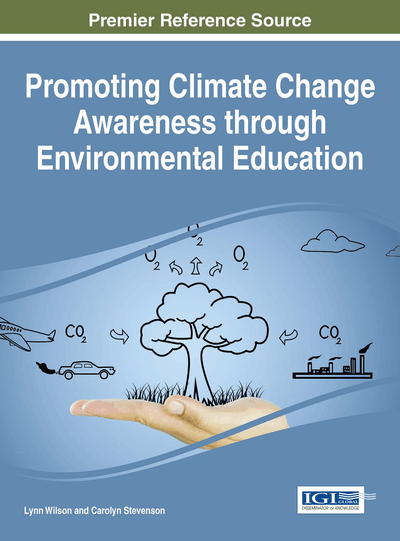
Highlighting this reality is a vital publication from IGI Global: Building Resilience to Climate Change at Local Levels:
The Role of Education. Authored by esteemed environmental educator Professor Mphemelang Joseph (M.J.) Ketlhoilwe,
this featured chapter dives deep into the intersection of human behavior, community vulnerability, and the transformative power of environmental education.
Transboundary Solutions for Shared Resources
The importance of the SADC REEP framework and Prof. Ketlhoilwe’s work cannot be overstated because ecosystems do not respect national borders.
Southern Africa is defined by shared ecological features.
The Zambezi River flows through six countries.
The Okavango Delta relies on water originating in Angola, passing through Namibia, before sustaining life in Botswana.
If one country implements strict conservation laws but its neighbor does not, the entire ecosystem collapses.
SADC REEP is the vital glue that holds regional conservation together.
By ensuring a teacher in a rural Namibian village uses the same core sustainability frameworks as a university lecturer in Botswana,
SADC REEP guarantees a unified, transboundary approach to environmental stewardship.
They are not just educating citizens of individual nations; they are cultivating a generation of regional stewards capable of managing shared continental resources.
Forging Global Alliances: GEEP, NAAEE, and the African Voice
The innovations born from SADC REEP and leaders like Prof. Ketlhoilwe are not just regional success stories;
they are crucial blueprints for the rest of the world. This is where powerful synergies with the Global Environmental Education Partnership (GEEP)
and the North American Association for Environmental Education (NAAEE) come into play.
- 1.A Two-Way Street of Knowledge: Historically, educational aid flowed from the Global North to the Global South.
- SADC REEP changed that dynamic.
- Through networks like GEEP, the deeply successful, community-based models developed in Botswana and South Africa are now shared globally.
- North American educators (via NAAEE) can learn immensely from Prof. Ketlhoilwe’s integration of Indigenous Knowledge Systems,
- applying those lessons to partnerships with First Nations and Native American communities.
- 2.The GEEP Africa Node: The legacy of SADC REEP's networking pillar lives on through EEASA,
- which serves as a vital regional node for GEEP.
- This ensures that the Southern African perspective is strongly represented in global policy discussions,
- enabling African educators to co-design global strategies rather than merely adopt them.
- 3.Scaling Resilience: As the entire globe faces climate-induced droughts and shifting weather patterns,
- the resilience frameworks developed by SADC REEP over the last 30 years provide a tested,
- empirical roadmap for educators in North America, Asia, and Europe.
Ultimately, the story of SADC REEP since 1994,
championed by dedicated visionaries like Prof. M.J. Ketlhoilwe, is proof that when we invest in collaborative,
culturally relevant environmental education, we don't just protect nature—we uplift entire societies.